Operating Model Design
Building a Shared Foundation for Scalable Digital Delivery
Built a shared UX operating foundation that reduced custom work, increased delivery capacity, and enabled more consistent digital execution across VMware Marketing.
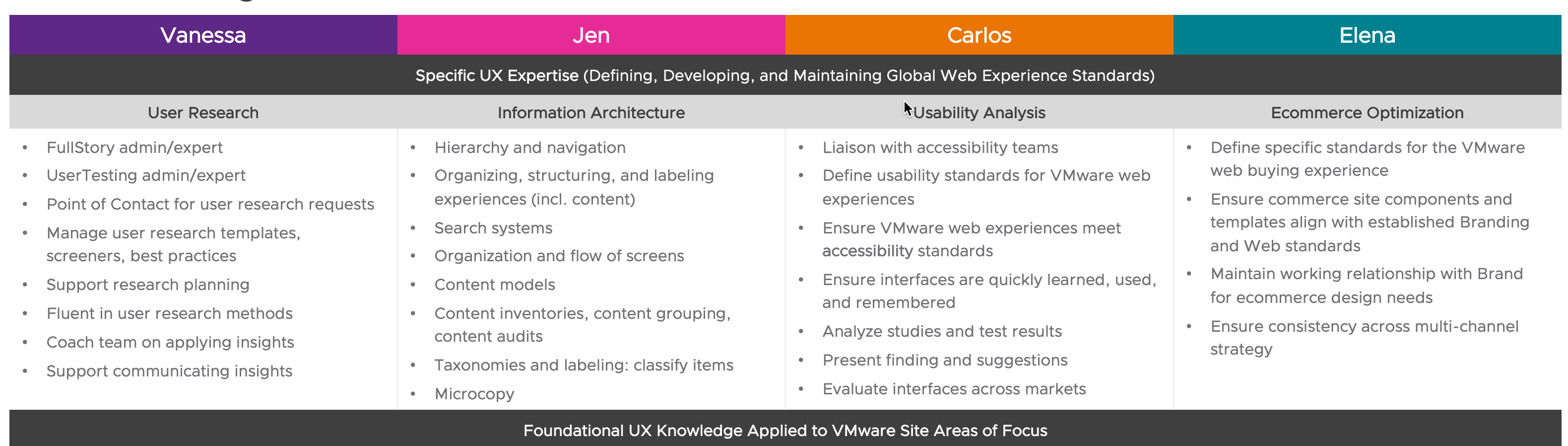
The Challenge
VMware had talented UX professionals, but no shared foundation for how digital experiences were created.
Teams operated independently, duplicated work, relied heavily on custom solutions, and depended on engineering for routine implementation. Without shared standards or reusable assets, scaling delivery meant adding effort rather than improving capability.
The Solution
Addressed the problem on two fronts.
First, unified a distributed UX organization around shared operating principles, common workflows, and a stronger team identity. Second, established a centralized design system with reusable patterns, documented standards, and self-service capabilities.
The objective was not simply standardization. It was making the desired way of working the easiest way to work.
Before
After
What Changed
Teams stopped asking, “Who can build this?” and started asking, “Which pattern should we use?”
Designers shifted from isolated execution to coordinated delivery. Marketing teams became more self-sufficient. Engineering resources moved away from repetitive implementation work toward higher-value initiatives.
The organization gained a shared operational foundation that improved both efficiency and consistency.
Results
- 72% reduction in outsourced UX work.
- 61% reduction in engineering requests for marketing pages.
- 64% reduction in duplicate design patterns.
- 52% increase in UX delivery capacity.
- Customer return intent increased from 34% to 78%.
Key Learning
Scale comes from giving talented teams a shared foundation, not from asking them to work harder. Sustainable capability requires people, process, and reusable infrastructure working together.